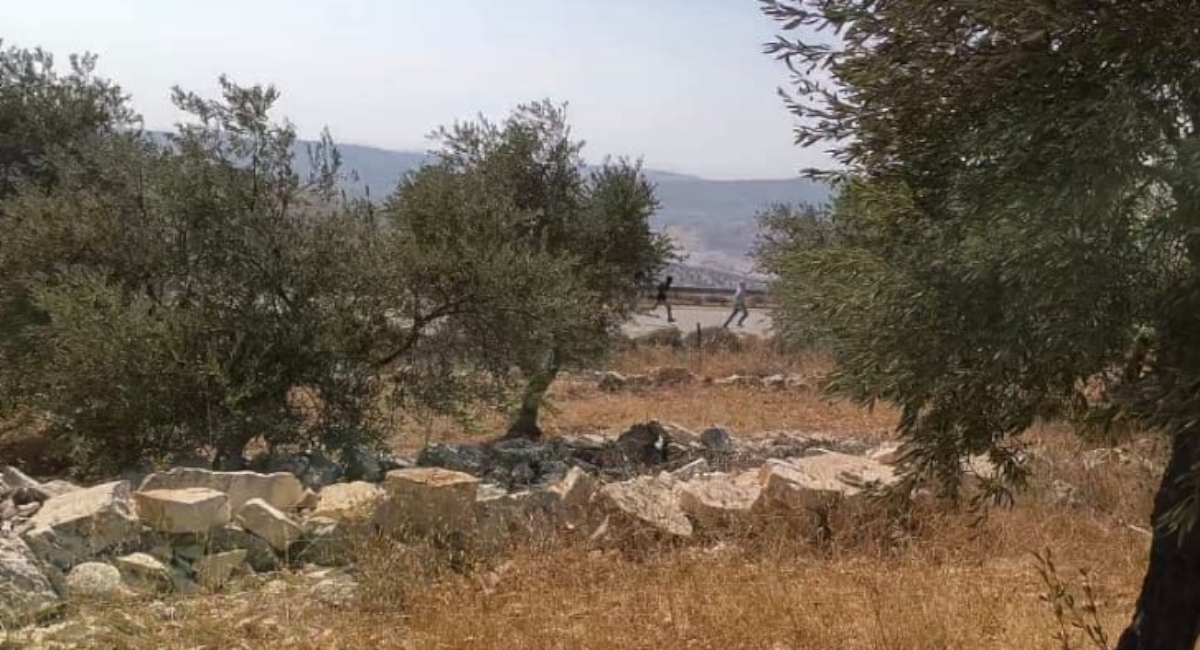
In November 2024, I joined Rabbis for Human Rights on an olive‑harvest outing in the West Bank, undercover, hoping to witness firsthand how alleged settler violence unfolds. For years I had investigated such cases only after the fact, usually finding that activists or Palestinians had instigated confrontations. I expected this trip to confirm that pattern. Instead, what I saw—and what I later discovered about the land itself—left me shaken.
I boarded the bus that morning convinced I already understood what I was about to see. I believed the olive groves were on Israeli public land in Area C, where Palestinians cannot legally cultivate without a license. I expected that any confrontation would be provoked by activists, with settlers reacting and being filmed as aggressors. I wanted to be an eyewitness to things I had written about previously from online evidence only.
Two settler vehicles watched us from a hill as we arrived. Soon they drove down, passed us twice, and filmed. A volunteer muttered something and knocked a phone out of a settler’s hand. I picked it up and returned it. When I tried to ask the driver a question, he turned away. The exchange was unpleasant but not threatening.
We climbed into the grove. Palestinian women spread plastic sheets under the trees. Farmers and volunteers beat branches or combed olives free.
Then a commotion erupted in the larger grove. Settlers were running toward us. Stones began flying through the trees. I had come to document whether violence was instigated by settlers or activists. Here, the violence was unmistakably from settlers. “I did not see any Arabs throw stones; rather, it was settlers who did.” I debated whether to move for a clearer view or run. Not wanting a stone in my head, I tried to flee but could not climb further. I sat on a rock, short of breath. Two days later I learned it had been a mild Takotsubo heart attack.
When the stone‑throwing stopped, volunteers, farmers, and soldiers stood along the road. I sat beside another older woman. Two young soldiers approached, asking where she was from. She snapped, “It’s none of your business.” Their faces fell. I tried to soften the moment—“I’m from Haifa”—but they had already withdrawn. Her contempt shocked me.
The army soon declared the area a closed military zone. Three RHR members were arrested, apparently for arguing with soldiers. Everyone dispersed.
Competing narratives appeared immediately. Settlers claimed activists and Arabs used the harvest as cover for provocation and that Arabs threw stones. RHR claimed about twenty settlers attacked farmers and volunteers with stones and poles, injuring several. I did not see so many settlers and there was no medical treatment on site. The only injury later confirmed was an RHR staff member’s bruised shoulder. They did not know about my heart attack until after they reported on injuries.
I could have written the article then. But without knowing who owned the land, the story felt incomplete. For months I searched for an answer. I expected confirmation that the groves were Israeli public land. Instead, an anonymous source finally told me the truth: “the land is, in fact, privately owned by the Arab farmers.”
I froze. Had the answer aligned with my assumptions, my investigation would have ended. Realizing this disappointed me. The unwelcome truth forced me into deeper questions about land law and Civil Administration records. The settlers almost certainly knew the land was private. Their harassment, in this case, had no pretext.
Official statistics show most violence in the region is committed by Palestinian Arabs against Jews, and some Jewish violence is reactive. But that is not what I saw. I witnessed unambiguous settler violence. My heart broke to see Jews throw rocks at us—and to see volunteers scorn soldiers who could have been their brothers or grandsons. Learning the land belonged to the farmers was the final blow to my confidence in what I thought I knew.
You can read the full in‑depth Substack version of this article here.
👉 Subscribe to my Substack newsletter to follow my new essays and access all full‑length pieces, including extended interviews, analysis, and research: Israel Diaries – The Deep Dive
Discussion (0)
No comments yet. Be the first to share your thoughts!
Leave a Comment