During the July 2026 American strikes on Iran, videos emerged of Iranians celebrating explosions near their own homes. These reactions reflect a decade‑long shift in anti‑regime sentiment, shaped by failed protests, mass repression, and the belief that the Islamic Republic cannot be reformed. This abridged article traces how Iranian discourse evolved from demands for reform to welcoming foreign attacks on regime targets.
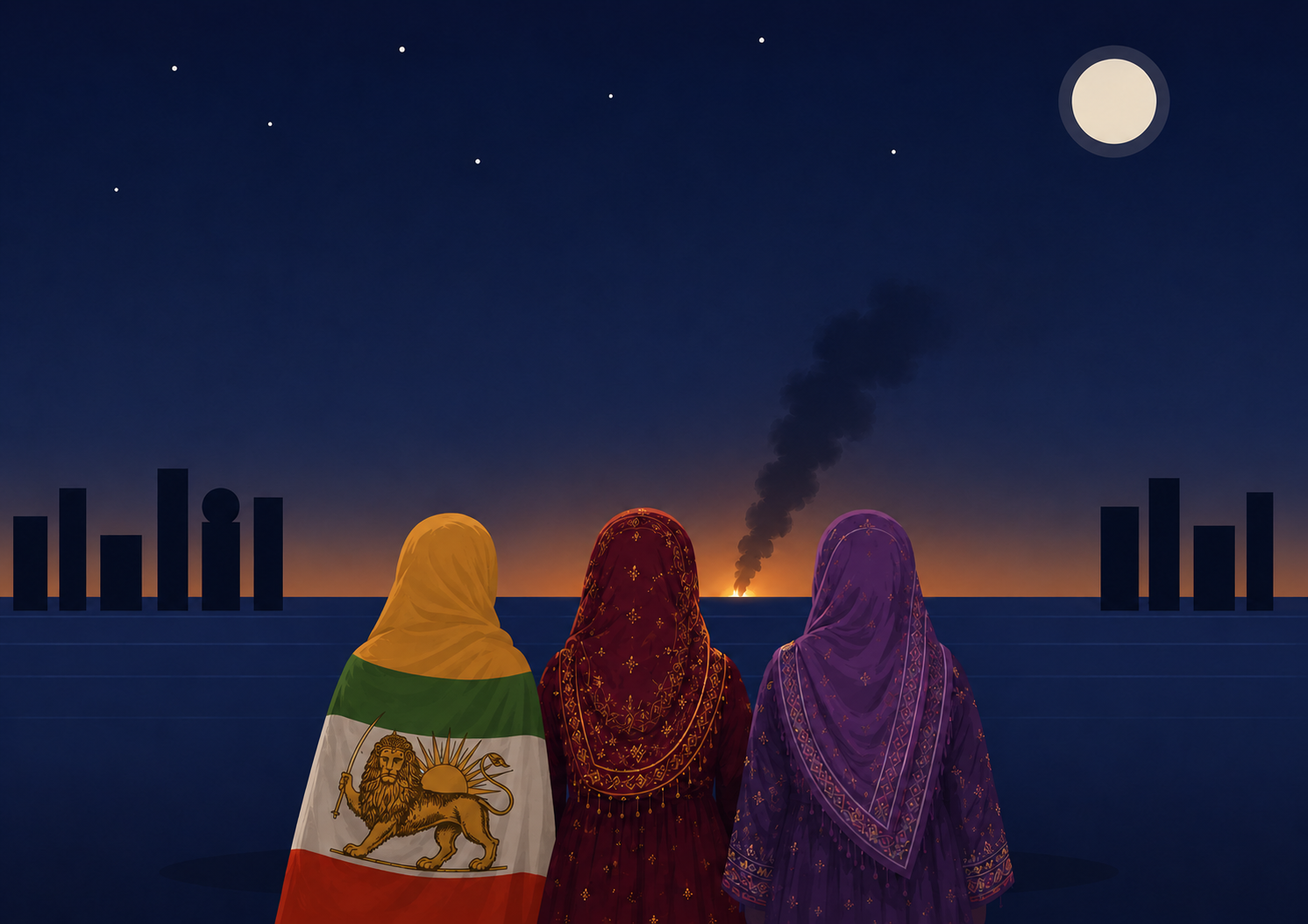
During the latest American attacks on the Iranian regime, videos circulated of Iranians celebrating bombs falling near their own homes. One widely shared clip showed Bandari women in traditional embroidered dress dancing and chanting against the regime as explosions sounded nearby. Their public defiance was striking, especially given that thousands of protesters were killed during the December 2025–January 2026 demonstrations, a massacre obscured by internet blackouts. Other posts showed regime forces deployed to prevent any repeat of mass protests.
This reaction reflects a long evolution in anti‑regime discourse. A research team analyzing slogans from major protest waves between 2009 and 2022 found a clear shift. The 2009 Green Movement focused on specific officials and distinguished between the original Basij and its current role. Later protests abandoned the idea that regime institutions were reformable. Slogans expressed regret over the 1979 revolution — “We made a revolution. What a mistake we made” — and rejected the regime’s regional policies: “Neither Gaza nor Lebanon, my life for Iran.” By 2022, protesters openly declared that the regime, not foreign powers, was the true enemy.
Symbols shifted as well. Many dissidents revived the pre‑1979 Lion and Sun flag, asserting a distinction between Iran and the Islamic Republic. This separation helps explain why some Iranians later welcomed attacks on regime targets without seeing themselves as welcoming attacks on Iran.
Anti‑regime voices on X now openly support the strikes. One Iranian from southern Iran wrote that the bombings reflected his heart and thanked the U.S. Army, declaring that Iranians were “the boots on the ground” ready to act when Reza Pahlavi called. Others argued that the real catastrophe was not destroyed bridges but the January 2026 slaughter of tens of thousands. “This is Iran’s infrastructure,” one wrote, posting an image of civilians — “not a bunch of bridges and IRGC military sites.”
Some dissidents are reclaiming pre‑Islamic cultural identity. One shared a video of the Whirling Sama Soroastrian Dance, writing: “Iranians never fully surrendered to Islam… The fire of Persia still turns.” Others described the Islamic Republic as an occupying force.
Most societies rally around the flag during foreign attacks. But for many Iranians who no longer see the state as their own, the bombs represent hope — not destruction.
You can read the full in‑depth Substack version of this article here.
👉 Subscribe to my Substack newsletter to follow new essays and access full‑length pieces, analysis, and research: Israel Diaries – The Deep Dive
Discussion (0)
No comments yet. Be the first to share your thoughts!
Leave a Comment