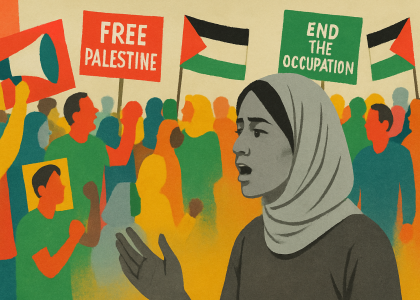
Across decades of conflict, diplomacy, and protest, a wide range of Palestinian voices have been ignored—by Arab regimes, by Palestinian leaders, by Israel, and by Western activists who claim to speak for them. While global demonstrations repeat familiar slogans, Palestinians themselves express far more diverse, contradictory, and pragmatic views. This article traces the voices that were silenced, dismissed, or erased, and asks what might have changed had we listened from the start.
The Silences We Mistake for Consensus
Western protesters chant “Free Palestine” with certainty about what Palestinians want. Israelis on both left and right also assume they know. But two “silences” have long distorted perception: the lack of public condemnation after terror attacks, and the absence of public regret after failed peace talks. These silences were treated as proof of collective Palestinian support for violence or rejectionism. Yet many Palestinians did speak—quietly, privately, or at great personal risk. Their voices simply went unheard.
The Diversity We Refuse to Hear
Riwaa, a young woman in Gaza, described a normal life before October 7th: work, gym visits, family gatherings, scholarship plans. She insisted that Hamas “wouldn’t affect my life,” viewing them as one political faction among others. Her family stayed out of politics.
Manar, raised in Syria and Egypt and later a student in Gaza, offered the opposite view. She joined the “We Want to Live” protests against Hamas and said: “The people have no way to dream… Everything that entered Gaza was taken by Hamas.” She blamed Hamas for violence against Gazans.
Other Palestinians challenge Western activism directly. Hamza Howidy criticized “Pan‑Leftism” for harming Palestinians. Journalist Rami Saeed called “Free Palestine” meaningless. Activist Yahya al‑Hajj rejected violent resistance entirely. Manar dismissed Western protesters as “not open to listen to the other side of the reality.”
These voices contradict each other—and that is the point. Palestinian opinion is not homogeneous.
A History of Silencing Moderates
From 1948 onward, moderates were sidelined or eliminated. The All‑Palestine Government in Gaza was dismantled by Egypt. Jordan orchestrated the Jericho Conference to annex the West Bank. Local leaders advocating autonomy or compromise were branded collaborators, ostracized, or assassinated: Mustafa Dodin, Aziz Shehadeh, Abu Rahmeh, and Nablus mayor Zafer al‑Masri among them.
More recently, PA critic Nizar Banat was beaten to death by PA security forces in 2021. His killing sparked brief protests before silence returned.
These patterns show that Palestinian diversity existed—but was suppressed by Arab regimes, Palestinian factions, and the international community’s preference for a single “representative” voice.
What Palestinians Actually Say
Individual testimonies reveal a spectrum of views. A Palestinian worker told an Israeli leftist in 1989: “The worst thing that can happen is for us to have a state.” Hanan Ashrawi later echoed concerns about Oslo’s legitimacy. Former Fatah fighter Mohammed Massad accused the PA of destroying job opportunities and becoming “contractors of the occupation.” Zara, a West Bank resident, estimated that “maybe 90%” oppose the PA but cannot say so openly. Others privately said they would prefer Israeli residency to PA rule.
Meanwhile, one Palestinian lamented: “There are more demonstrations on the streets of London than in Nablus and Ramallah.”
Dismissing these voices as unrepresentative is a form of silencing.
The Cost of Not Listening
The PA depends on international aid, Arab regimes treat Palestine as a managed grievance, and Western activists project their own narratives. Israel, too, has empowered leaders who suppress local moderates. All these forces benefit from ignoring Palestinian diversity.
Today, many Palestinians are exhausted. “Nobody cares about the Palestinian people,” one man said. “We are on our own.” Western slogans drown out the voices they claim to amplify. Palestinians themselves say so.
You can read the full in‑depth Substack version of this article here.
👉 Subscribe to my Substack newsletter to follow my new essays and access all full‑length pieces, including extended interviews, analysis, and research: Israel Diaries – The Deep Dive
Full Series
- Silencing Palestinians with reconciliation on the table
- Roots of resistance, 1967 to 1987
- Voices among the stones, 1987 to 2000
- Silenced twice – the women who led the first intifada
- Gaza and the West Bank – One people? Really?
- Survival mode in the West Bank, 2000 to 2025
- Dreams interrupted, life in suspension in Gaza
Discussion (1)
this is a test this is a test this is a test this is a test this is a test this is a test this is a test this is a test this is a test this is a test this is a test this is a test this is a test this is a test this is a test this is a test this is a test this is a test this is a test this is a test this is a test this is a test this is a test this is a test this is a test this is a test this is a test this is a test this is a test this is a test this is a test this is a test this is a test this is a test this is a test this is a test this is a test
Leave a Comment