Discussions about Lebanon, Hezbollah, Iran, and ceasefires often unfold at the level of strategy, but for Israelis living along the northern border, these decisions shape daily life in immediate and sometimes devastating ways. Lieutenant Colonel Sarit Zehavi, founder of Alma — an independent research and education center focused on northern security — recently shared a personal message that captures what these geopolitical choices look like inside real homes and real families.
Stepping Back from the Strategic Fray
Most conversations about Lebanon, Hezbollah, Iran, and ceasefires take place in the language of strategy. Analysts debate deterrence. Politicians talk about leverage. Military experts assess capabilities. But for those living in northern Israel, these discussions are not abstract. They unfold in real time, in real neighborhoods, and in the lives of families who have spent the past two and a half years under fire.
Lieutenant Colonel Sarit Zehavi, founder and president of Alma, has long analyzed the security challenges along Israel’s northern border. She also lives there. The events she studies are the same events shaping her family’s daily life. She recently sent a personal email to her subscribers, and I am sharing it here because every strategic decision eventually lands in someone’s living room, someone’s classroom, or someone’s mourning tent.
“Today, my message to you is that of a resident of northern Israel…”
Sarit writes as a mother, a neighbor, and someone who is grieving. The residents of the north, she says, are deeply frustrated by the latest developments. It feels as though Washington and Tehran are determining whether Israeli children can safely attend school. Despite the IDF’s achievements over the past two and a half years, the outcome of yesterday’s decisions that Israel and Hezbollah hold fire means Hezbollah is now free to rebuild its military capabilities in Beirut and the Bekaa Valley.
This renewed immunity, she warns, will cost more Israeli lives. Two fears dominate daily life. First, no one knows the scale of the arsenal Hezbollah will now be permitted to rebuild. Second, whenever Iran wants leverage over the United States, it can simply say again that they will stop negotiations as long as Israel is firing at Hezbollah.
The mental exhaustion of living under constant fire is indescribable. Parents feel they are failing their children. Older kids cannot be left alone at home. Family celebrations and cultural events are impossible. Small businesses cannot survive. The sense of living in a permanent state of war grows heavier each time Israel’s freedom of action is restricted.
Sarit describes a rocket attack on Karmiel that caught her in a crowded shopping center. Sirens wailed. Interceptions exploded overhead. There were too many people and too little time; no one could reach a shelter. In those moments, she writes, you are completely exposed, relying only on the hope that Iron Dome will not miss.
Schools across the north have postponed matriculation exams. Her daughter, like many others, has been sitting at home instead of attending classes. These disruptions, she notes, are significant — but they are not the worst of it.
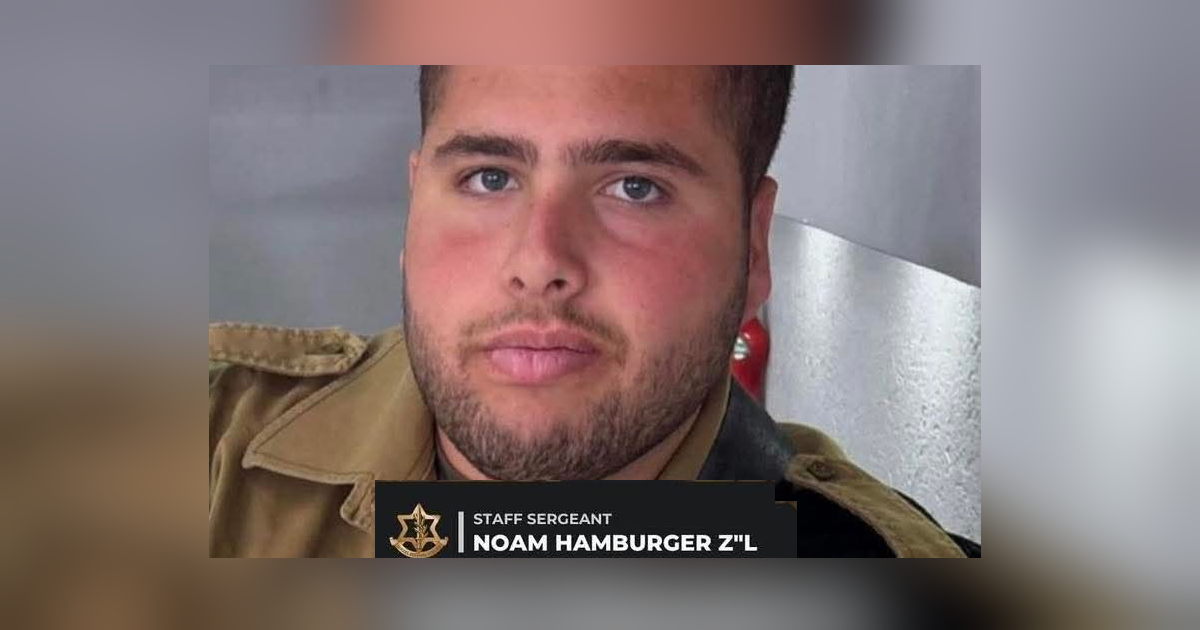
Last week, Sarit spent every day sitting Shiva. Her cousin’s son, IDF Staff Sgt. Noam Hamburger, was killed on his base inside Israeli territory one month before his discharge. He was, she writes, a wonderful young man. Before his draft, he spent one day a week delivering food to families in need with his mother. He was a devoted older brother to his three sisters. He believed deeply in giving to others.
Why I Am Sharing This
Publishing Sarit’s email is my way of offering condolences to Noam Hamburger’s family — and of reminding us that the subjects we discuss as policy, strategy, and diplomacy are lived by real people in real places.
You can read the full in‑depth Substack version of this article here.
👉 Subscribe to my Substack newsletter to follow my new essays and access all full‑length pieces, including extended interviews, analysis, and research: Israel Diaries - The Deep Dive
Discussion (0)
No comments yet. Be the first to share your thoughts!
Leave a Comment