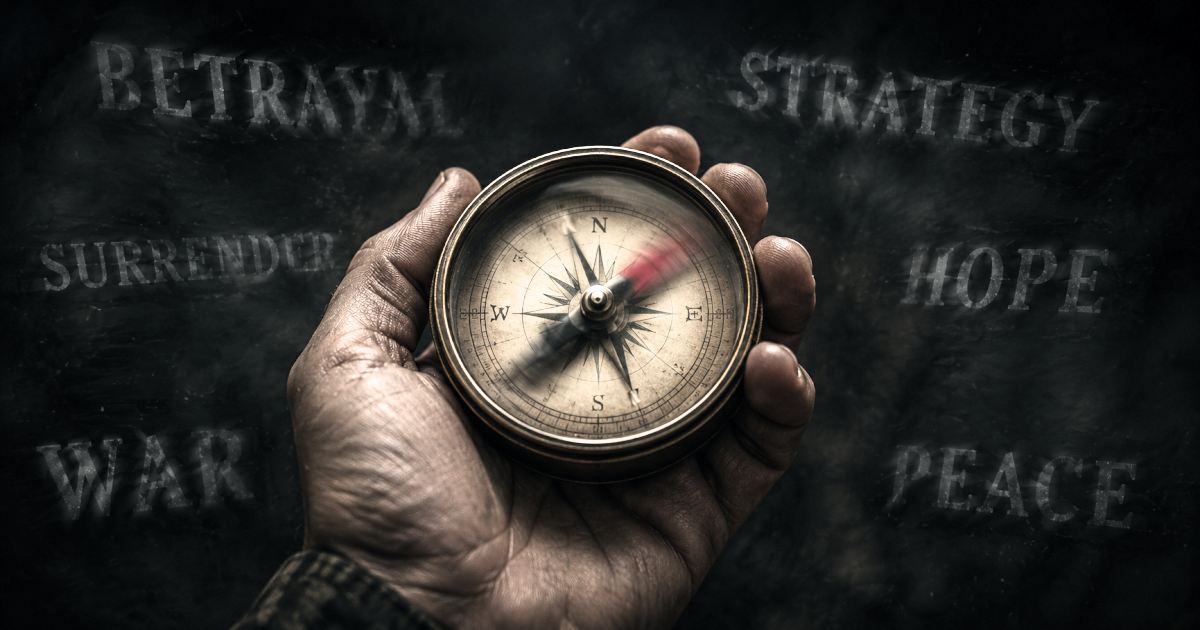
The shock began with Trump’s apparent willingness to move forward with an interim deal with Iran, followed by his harsh criticism of Israel and Netanyahu at the G7 Summit. As the article describes, “It felt like a major betrayal.” Seeking clarity, I turned to Israelis, Iranians, and analysts, only to find intelligent people interpreting the same events in completely different ways. The MOU became a lens revealing how uncertainty drives divergent predictions, and how each group fears losing something different.
The article opens with a jolt: Trump seemed ready to advance an interim deal with Iran, and then “came down so hard on Israel and Netanyahu at the G7 Summit… that my head is still whirling.” The sense of betrayal was immediate. Looking for orientation, I turned to trusted voices — Israelis, Iranians, Middle Eastern analysts, Andrew Fox — expecting clarity. Instead, “I found intelligent people looking at the same events and seeing completely different futures.”
The context intensified the confusion. On 28 February, Israelis awoke to warnings to prepare for war after “we just assassinated Khamenei.” It followed the elimination of Sinwar, the beeper operation against Hezbollah operatives, and Nasralleh’s assassination. It felt like a decisive moment: “a war to finally end in clear victory,” one that might topple the Islamic Regime and free both Israelis and Iranians from existential threats.
But the momentum dissolved into “interminable zigzags.” Announcements of a deal, threats of more war, and renewed expectations that Trump would “finish the job.” Israelis waited for open war to resume. Instead, reports emerged of an “understanding” with Iran, with a preliminary signing set for 19 June that included reopening the Hormuz, easing sanctions, and beginning negotiations toward a final deal. Then came Trump’s remark that “Syria could handle getting rid of Hezbollah better than Israel.”
To make sense of the reactions, the article presents two tables. Table 1 organizes key figures by their major concerns. The emotional force behind their posts is captured in quotes:
“Mosab Hassan Yousef: ‘This isn’t a deal. This is surrender dressed up as diplomacy.’” “Haviv Rettig Gur: ‘Welp, I think we're done here.’” “Elica Le Bon: ‘I cannot overestimate how devastating this decision will be.’”
Dave Bender’s comment stood out: “The people who know aren’t talking, the people who are talking really don’t know.” His advice — wait 72 hours — offered neither optimism nor pessimism, only discipline.
Table 2 contrasts reactions before and after the MOU text became public. Israelis reacted immediately to leaks and rumors; Iranians mostly waited for the actual document. Amid the noise, Bender’s restraint lingered: “wait 72 hours.”
I had expected these voices to provide anchoring. Instead, they revealed a landscape of absolute certainty and total disagreement. “The catastrophe is certain. The strategy is certain. The betrayal is certain. The next war is certain.” But these weren’t competing analyses; they were expressions of loss. Each community feared losing something different: “security, freedom, survival, regional balance, strategic clarity.” They were grieving futures they believed the fighting would deliver.
The most grounding voice turned out to be the first one: Dave Bender’s insistence on waiting. Now, after the digital signing, the question becomes whether another 72 hours are needed to understand what lies ahead.
The article ends with the only certainty: “I know what I hope.” The hope is simple and stark: that the war resumes, the regime falls, the Iranian people are freed, and Israelis are released from cycles of existential conflict.
You can read the full in‑depth Substack version of this article here.
👉 Subscribe to my Substack newsletter to follow my new essays and access all full‑length pieces, including extended interviews, analysis, and research: Israel Diaries – The Deep Dive
Discussion (0)
No comments yet. Be the first to share your thoughts!
Leave a Comment