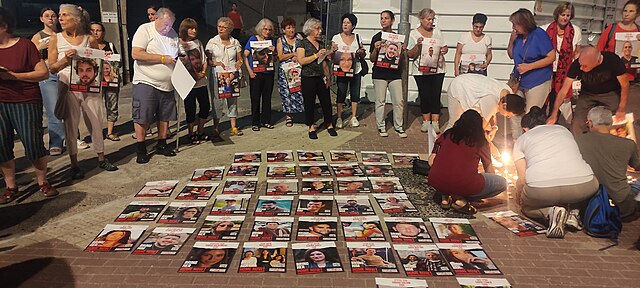
Israel’s debate over hostage deals with Hamas is often framed in simple moral terms: “Bring them home at any price.” But the reality facing the country’s leaders is closer to a national “Sophie’s Choice”—every option carries unbearable consequences, both for the hostages and for Israel’s future security. This article explores the impossible decisions involved in negotiating with Hamas, the emotional pull of the demonstrations, and the long‑term costs that many protesters may be unwilling to confront.
In Sophie’s Choice, a mother in Auschwitz must choose which child will live and which will die. Israel’s leaders face a different but similarly impossible moral landscape: any decision about hostage deals with Hamas will condemn some people to death—now or later. That is why I cannot join demonstrations demanding a deal “at any price.” I try to imagine what it feels like to sit in the room where these decisions are made.
The cruel arithmetic of past and present deals
Consider 2006. Gilad Shalit’s family pushed for a deal, and Israel ultimately released 1,027 terrorists to bring him home. We now know that some of those freed went on to murder Israelis and help plan the October 7th massacre. If you had known that in advance, would you still have agreed to the deal?
Fast‑forward to late 2023. Israel negotiates again, knowing that releasing terrorists today may lead to future attacks and future kidnappings. Leaders must weigh the lives of current hostages against the lives of future victims. There is no choice that does not spill blood.
Now Hamas offers to release 22 hostages instead of the 34 Israel requested. Leaders know the names and faces on both lists—and the dozens not included at all. Do you take the 22 now, knowing the others may never return? Or refuse, knowing those 22 may die in captivity?
“At any cost?” Do we mean it?
If demonstrators insist on “any cost,” then the costs must be named. Would you accept a deal if you knew your own loved one would be murdered by a released terrorist? Would you trade all the hostages for ending the war with Hamas still in power—and accept the risk of another October 7th? Would you agree to a deal if the price was handing your own child to Hamas as a replacement hostage?
These questions sound extreme, but they reflect the real stakes. Someone in Israel’s leadership is forced to make choices no human being should ever have to make.
The protests: right pain, wrong target
I do not question the anguish of hostage families. But the slogans and locations matter. “Bring them home” implies Israel controls the situation; the real demand should be “Let them go,” directed at Hamas and the international bodies that have failed to act. Demonstrating outside the prime minister’s office only weakens Israel’s negotiating position. If the goal is to pressure Hamas, the protests should be outside UN and Red Cross buildings worldwide.
Would you want to be the one choosing?
Lists circulate: who is believed alive, who is a child, who is mentally ill, who is foreign. Somewhere, people are deciding who to request now and who must remain in Gaza. Would you want to be the one making that choice?
You can read the full in‑depth Substack version of this article here.
👉 Subscribe to my Substack newsletter to follow my new essays and access all full‑length pieces, including extended interviews, analysis, and research: Israel Diaries – The Deep Dive
Discussion (0)
No comments yet. Be the first to share your thoughts!
Leave a Comment