How did a member of a small, non‑Muslim minority become president of a Sunni‑majority country like Syria? And why do many Alawites born after 1971 mistakenly believe they are Muslims? To understand this, I spoke with “Haydar,” an Alawite Syrian now studying in the United States, who walked me through the political maneuvers, sectarian fears and historical forces that shaped modern Syria.
If some Syrian Alawites think they are Muslims, I can be forgiven for having thought so too. Many Alawites born after 1971 grew up believing that. How did that happen? And how did a member of a non‑Muslim minority become president of a Muslim country?
"Haydar," an Alawite now studying in the United States, spoke with me by Zoom. He was eager to explain his community’s history, and I reorganized his comments for clarity. He reviewed the final version to ensure accuracy.
From Oppressed Minority to Ruling Family
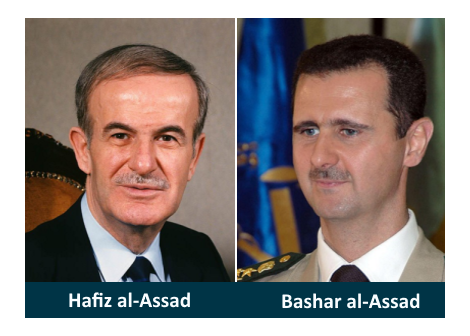
Before 1971, the Alawites were the most oppressed group in Syria. They were widely hated as infidels. Hafiz al‑Assad, however, was both ruthless and politically gifted. After becoming president, he sought recognition from Al‑Azhar Mosque in Egypt, asking that Alawites be considered a Muslim sect. They ignored him.
He had two motives. The Syrian constitution required the president to be Muslim, and he wanted to protect the Alawites by giving them a Muslim identity. But how did he rise so far in the first place?
Haydar explained that the Ba’ath Party was key. Founded by a Christian, an Alawite and a Sunni, it promoted secularism and pan‑Arab identity. Religious minorities, terrified of Islamist dominance, embraced it. Many Alawites enlisted in the military in the 1950s and 1960s to prove their loyalty as Syrians and Arabs. Assad rose through both the Ba’ath leadership and the military, eventually launching a coup in 1970.
The Sunni elite opposed him purely because he was Alawite. To win them over, he tried to gain religious legitimacy. When that failed, he launched the 1973 war against Israel to show he was fighting for a cause Sunnis cared about. Only then did Al‑Azhar issue a politically motivated statement recognizing Alawites as Muslims.
Taqiyyah, Image‑Crafting and Sectarian Manipulation
Assad used Taqiyyah, Haydar said, lying about Alawite beliefs to appear closer to Islam. He convinced Musa al‑Sadr, a Shia cleric, to classify Alawites and Druze as Shia in exchange for military support in Lebanon. Alawites were instructed to present themselves as Muslims and deny anything that made them appear non‑Muslim.
But Syrian Muslims could see the truth. Alawite women did not wear hijab. Alawites drank wine. Their lifestyle was liberal and nothing like Sunni practice. Many Alawites themselves suspected Assad’s moves were about power, not protection.
Did Alawites Benefit? Not Really.
There are four Alawite tribes. Assad’s tribe, the Kulebia, benefited. The others did not. One tribe opposed him entirely and paid the price. Assad imprisoned more than 180,000 Alawites who challenged him. The other tribes remained poor but continued sending their sons to the military because they believed it ensured survival.
Assad’s inner circle was mostly Sunni. He gave Sunnis major advantages to maintain control. His government was about 80 percent Sunni, while the army was split roughly in half.
Bashar Assad and the Collapse of Trust
When Hafiz died in 2000, many Alawites opposed Bashar. He was seen as weak, Westernized and disconnected from the community. His brother Maher threatened both Alawites and Sunnis with tanks to silence dissent. Thousands were arrested.
The Predicted Revenge
Haydar said many Alawites once wanted independence. They knew remaining inside a Sunni‑majority Syria was dangerous. What is happening to Alawites today, he said, was predicted decades ago but silenced. Now, as the Assad regime collapses, many Sunnis see an opportunity for revenge.
No Arab media talks about what is happening to us,” Haydar told me. “And those that do, justify it.
You can read the full indepth Substack version of this article here.
👉 Subscribe to my Substack newsletter to follow my new essays and access all fulllength pieces, including extended interviews, analysis, and research: Israel Diaries – The Deep Dive
Discussion (0)
No comments yet. Be the first to share your thoughts!
Leave a Comment